Summary
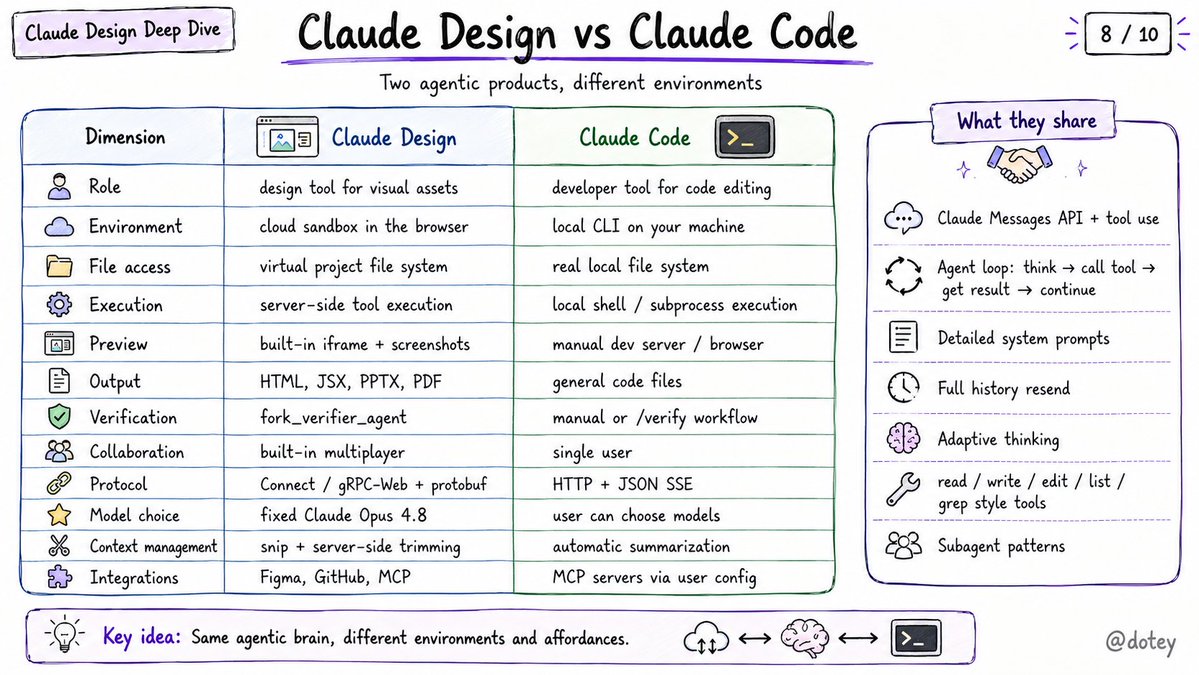
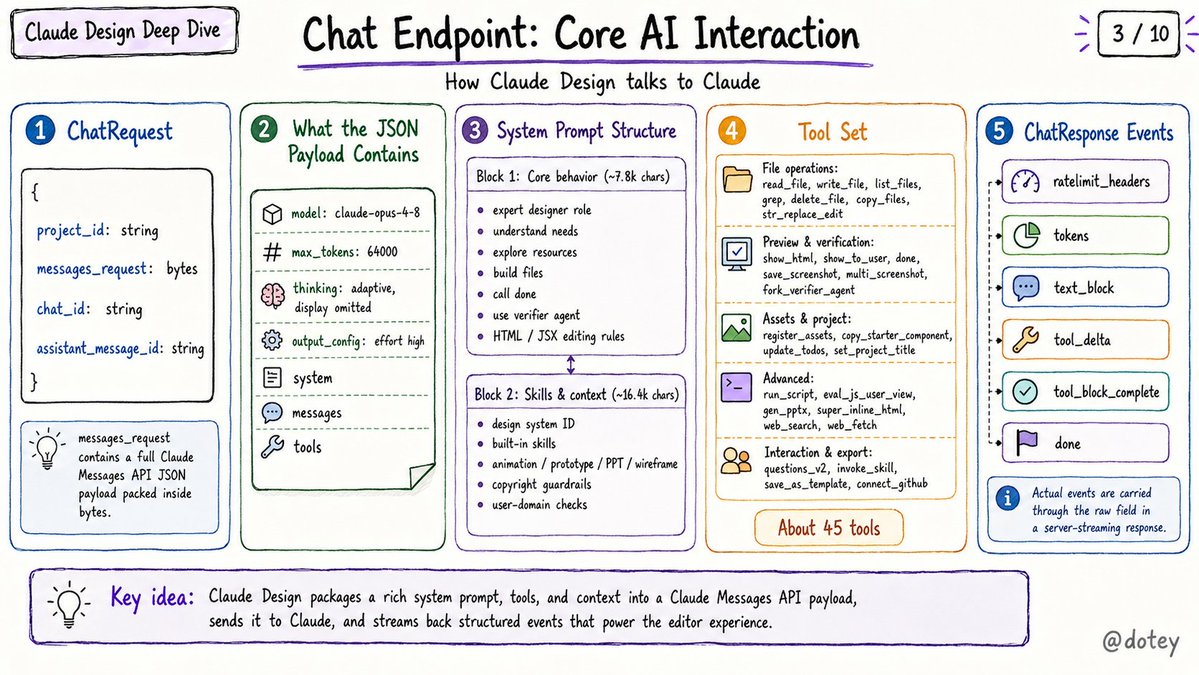
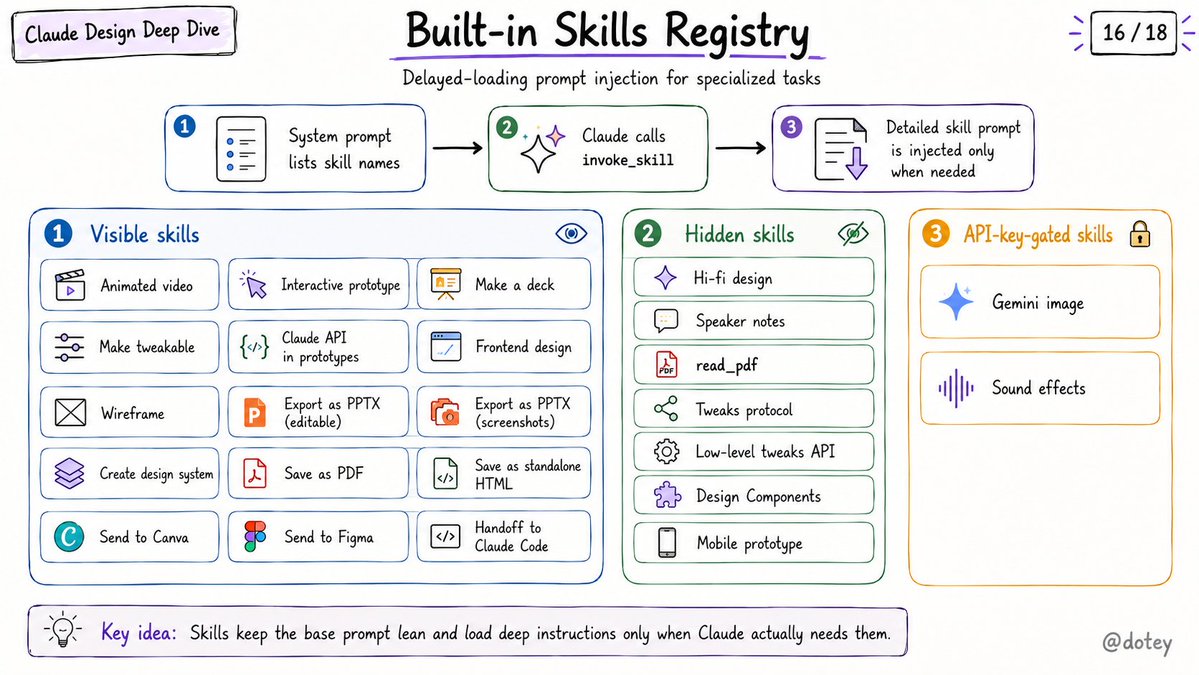
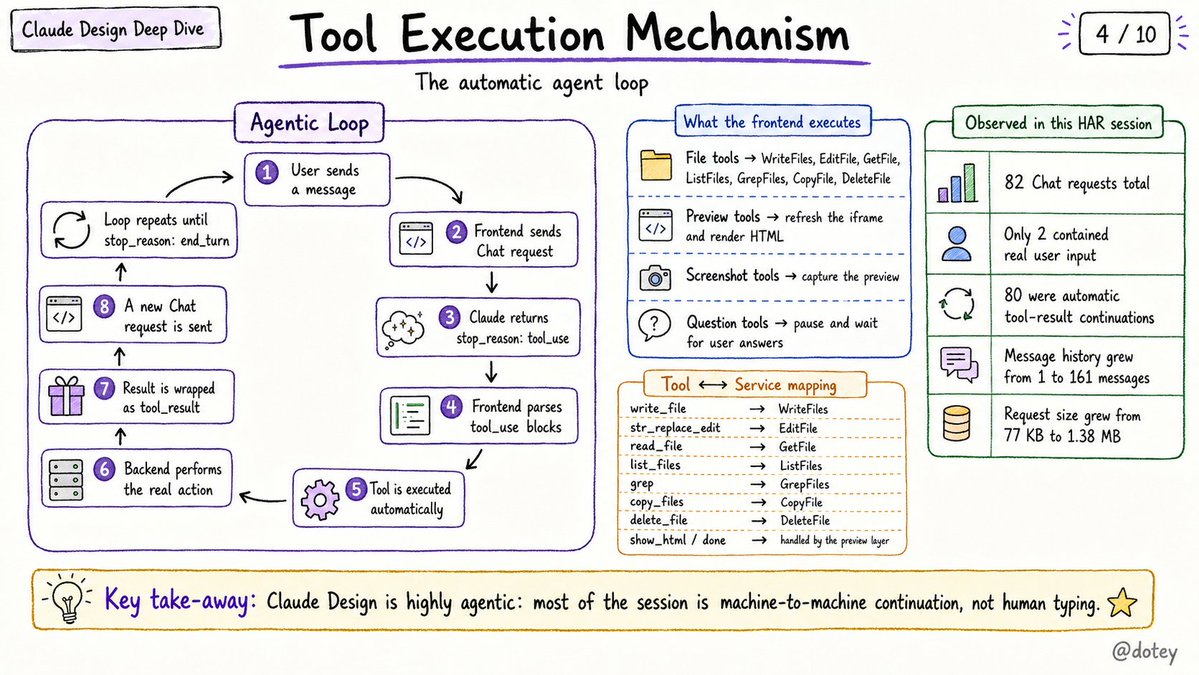
Claude Design is a complete agent runtime environment (an Agent Harness) developed by Anthropic. It is built on a browser and virtual machine architecture, providing 45 tools and 24 built‑in skills, and operates through an agentic loop. The system is comparable in functionality to Claude Code but differs in its underlying infrastructure.
Key Points
- Provides a full Agent Harness with an integrated agentic loop execution model.
- Contains 45 tools and 24 built‑in skills.
- Architecture is browser‑ and virtual machine‑based (contrasting with Claude Code’s approach).
- Allows for agent autonomy and task execution without external orchestration.
Concepts
- Agent Harness: The complete runtime environment that hosts and manages autonomous agents, including tool execution, skill invocation, and loop control.
- Agentic Loop: The core execution pattern where an agent iteratively perceives its state, reasons, takes actions using tools/skills, and observes results until completion.
- Skills: Pre‑defined capabilities bundled into the agent, enabling specialized behaviors without external configuration.
- Tools: Atomic functions the agent can call to interact with external systems or perform specific operations.
Details
According to a social media post by @dotey (宝玉), Claude Design possesses a fully self‑contained agent runtime environment – what the author terms an Agent Harness. The system is distinguished from Claude Code by its browser‑ and virtual machine‑based foundation, which provides isolation and flexibility. The harness includes 45 tools and 24 built‑in skills, allowing the agent to handle a wide range of tasks directly. Execution follows an agentic loop pattern, meaning the agent continuously cycles through observation, decision, and action until the goal is met.
The post also notes that Claude Design may not be immediately recognized as a harness because its internals are not exposed; the user observing the system sees only a single agent working autonomously. The quoted exchange with another researcher (@FanVancoo) highlights that the harness’s structure is not obvious even after close study, suggesting that Anthropic deliberately abstracts the orchestration layer.